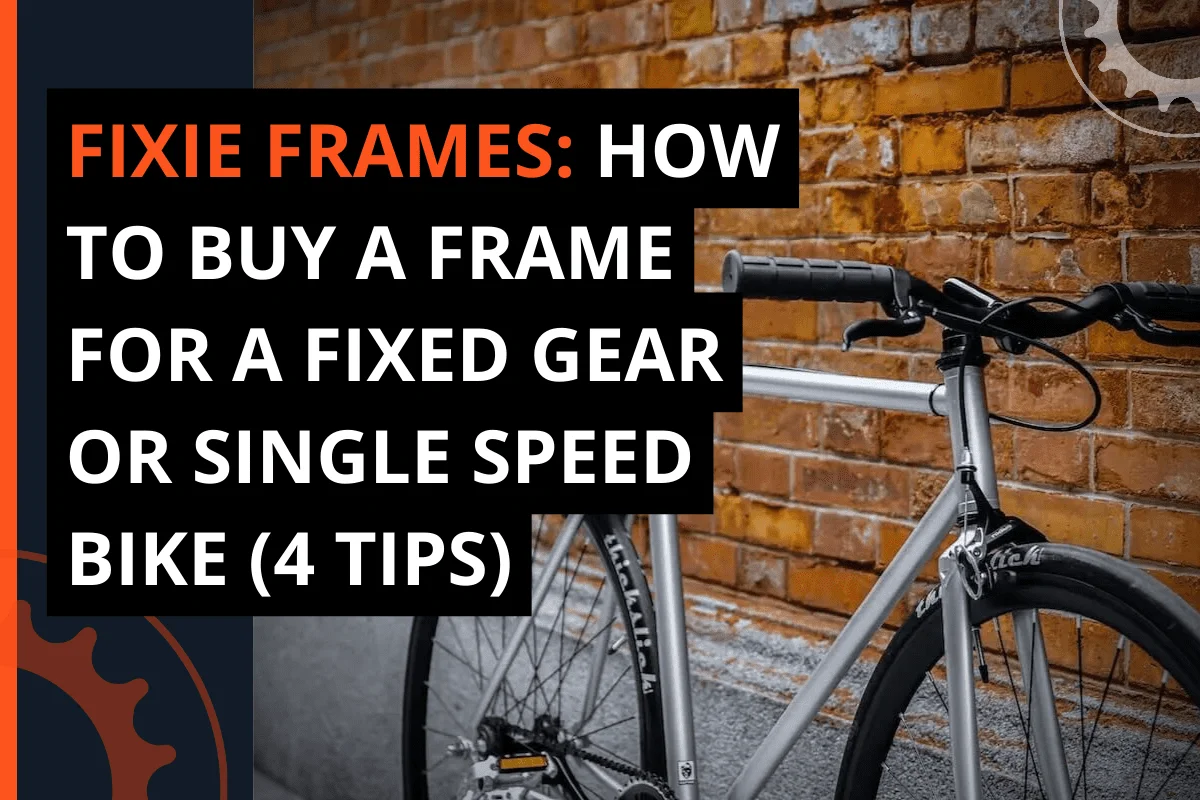
Fixed Gear Bike Buying Guide: Frames, Gearing, Brakes, and Wheels
The best fixed gear bikes are simple in appearance but highly sensitive to setup. Because the rear cog is attached directly to the hub, the pedals turn whenever the rear wheel turns. That connection gives a fixed gear bike its distinctive feel, along with direct acceleration, predictable handling, and a strong sense of control. It also means that frame fit, gearing, braking equipment, and tire choice deserve more attention than they might on a casual single-speed.
Fixed Gear Versus Single-Speed Drivetrains
A fixed gear drivetrain uses a cog that cannot coast independently of the rear wheel. To slow down, the rider resists the pedals or applies the brakes, depending on the bike’s equipment. A single-speed bicycle has one gear but uses a freewheel, so you can stop pedaling and coast. This makes a single-speed easier for beginners, relaxed rides, and routes with frequent descents.
Fixed gear bikes can feel more efficient and engaging on smooth roads because there is less drivetrain complexity and no need to shift. They are also useful for riders who prefer a consistent cadence and minimal maintenance. The trade-off is that steep hills, fast descents, and stop-and-go traffic demand more planning. Riders new to fixed gear should practice starting, stopping, and riding out of the saddle in a quiet area before commuting in traffic.
Choosing Between Steel, Aluminum, and Carbon Frames
Steel remains a popular choice for urban fixed gear bikes because it offers a durable, composed ride and can tolerate the everyday knocks associated with locking a bicycle outdoors or carrying it up stairs. Chromoly steel is generally lighter and more refined than basic high-tensile steel. Look for clean welds, replaceable wear parts, and rack or fender mounts if practical commuting is part of your plan.
Aluminum frames usually reduce weight and provide a lively response when accelerating from traffic lights. They do not rust like untreated steel, although the fork, headset, bottom bracket, and other components still need protection from water and road salt. Aluminum can transmit more vibration, so wider tires, a padded saddle, or a carbon seatpost may improve comfort.
Carbon fiber is most relevant to riders focused on racing, fast training, or minimizing weight. It can be stiff and responsive, but it usually costs more and requires careful inspection after a crash or significant impact. A carbon frame is not automatically a better choice for city use. Consider the quality of the fork, wheels, and finishing kit as well as the frame material.
Fit matters more than the frame label
Choose a frame by reach, stack, standover clearance, and saddle-to-handlebar position rather than by a broad label such as Men or unisex. Those labels often describe marketing categories rather than a precise body type. Compare the manufacturer’s geometry chart with a bike that already fits you, and check whether the stem, saddle, and handlebar allow enough adjustment. A slightly smaller frame with a suitable reach is often easier to control than a large frame that feels stretched.
How to Select the Right Gear Ratio
Fixed Gear Bike Wheels Explained (Sponsored by Wabi Cycles)
Gear ratio is calculated by dividing the number of teeth on the chainring by the number on the rear cog. A common starting point is around 2.6 to 2.8, such as 46 by 17 or 48 by 18. This range offers a useful balance of acceleration, manageable climbing, and enough speed for everyday riding. The exact choice depends on your fitness, terrain, cargo, and preferred cadence.
A lower ratio, such as 44 by 18, makes starts and hills easier but may cause your legs to spin quickly on descents. A higher ratio, such as 48 by 16, suits strong riders on flatter routes and provides more speed per pedal revolution, but it demands greater effort when pulling away from a stop. Beginners should usually choose an easier ratio and change it later if their routes or riding style call for more speed.
Check whether the rear hub supports a reversible wheel. Many fixed gear bikes use a flip-flop hub with a fixed cog on one side and a freewheel on the other, allowing the bike to operate as either fixed gear or single-speed. This flexibility is useful, but it does not replace checking axle spacing, lockring security, chain tension, and compatibility with the replacement cog.
Do You Need Brakes on a Fixed Gear Bike?
Leg resistance can help regulate speed, but it should not be treated as a complete substitute for a mechanical brake. A front brake provides important stopping power, especially on wet pavement, steep roads, or when an unexpected obstacle appears. Many riders choose a front brake while keeping the bike’s clean appearance, and some use both front and rear brakes for commuting and utility riding.
Brake requirements vary by location, so check local regulations before removing equipment. If a bike includes brakes, inspect the lever feel, cable routing, pad alignment, and rim or rotor condition before riding. A caliper should clear the tire and return smoothly, while disc brakes need a compatible hub, rotor, caliper mount, and sufficient frame clearance. Never assume that a minimalist track-style setup is suitable for public roads.
Wheel, Tire, and Component Features to Compare
Recommended products
Use these catalog picks as a shortlist for fixed gear bike buying guide: frames, gearing, brakes, and wheels. Compare measurements, materials, and return terms side by side instead of buying from a photo alone.
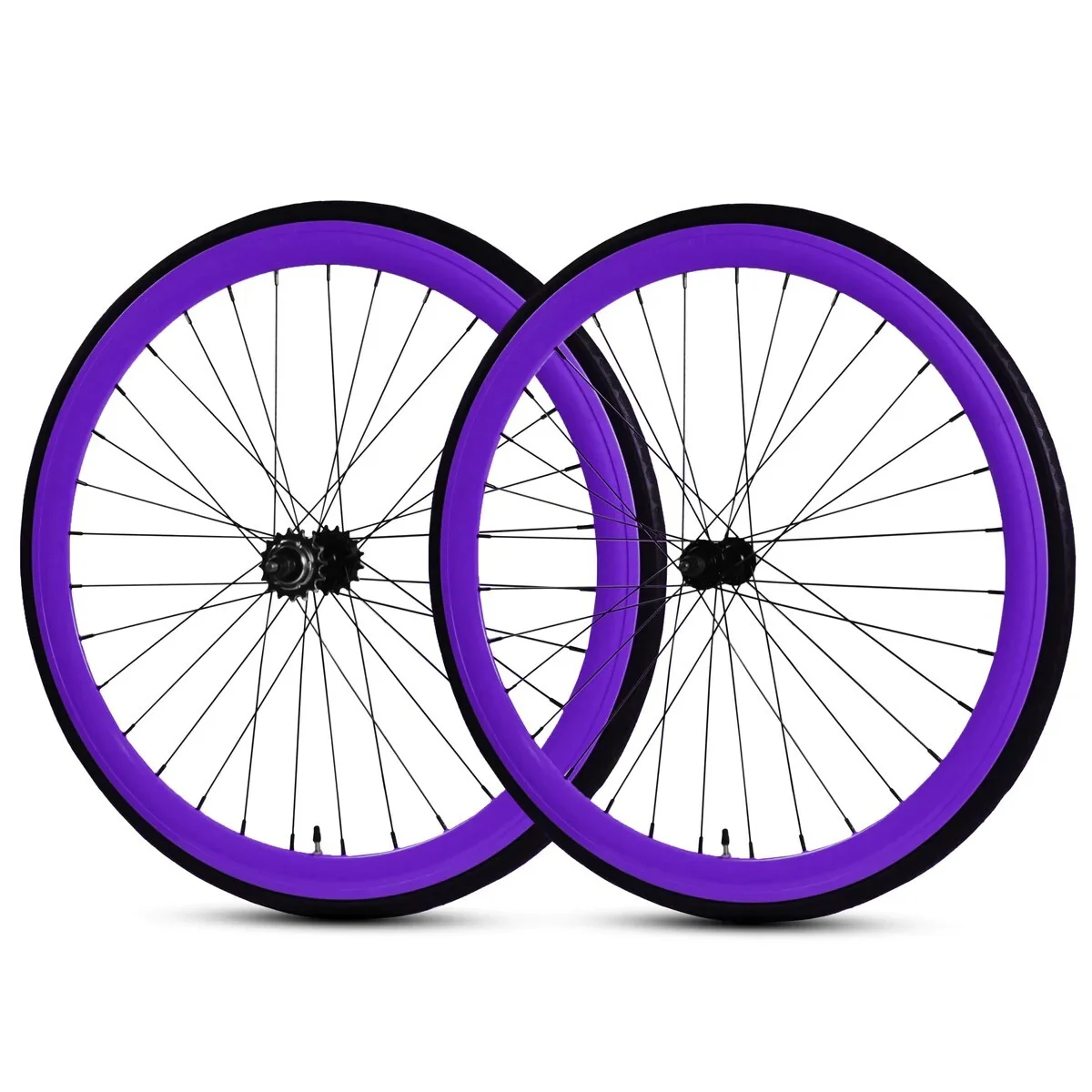

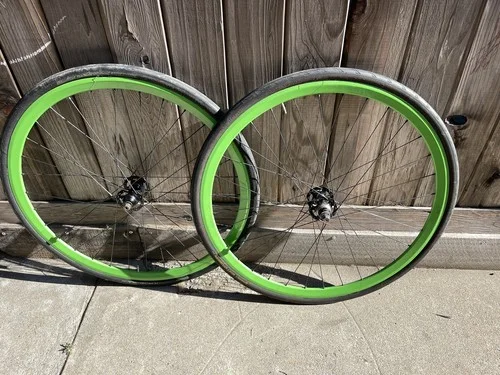
Wheel durability matters because fixed gear riders often accelerate hard and put repeated loads through the rear wheel. For city use, double-wall rims, a sensible spoke count, and sealed cartridge bearings are worthwhile priorities. Deep-section rims may look fast, but an aerodynamic profile is less important than serviceability and resistance to pothole damage on most urban routes.
Tire width affects comfort, grip, and puncture resistance. A 25 to 28 millimeter tire works well for smooth pavement, while a 30 to 35 millimeter tire can be a better choice for rough streets if the frame and brake clearance allow it. Check the tire’s recommended pressure rather than inflating to the maximum printed number automatically. Lower pressure within the approved range can improve grip and comfort, while excessive pressure may make the bike skittish.
Inspect the crank, bottom bracket, chain, pedals, and headset as carefully as the frame. A stiff two-piece crank can improve power transfer, while sealed bearings reduce routine maintenance. Toe clips or clipless pedals can keep your feet secure, but flat pedals are simpler for short commutes. Make sure the chain has the correct tension: too loose risks skipping or derailment, while too tight can damage bearings and create unnecessary drag.
Finishes, accessories, and everyday practicality
Color should not decide the purchase, but finishes can affect how easily a bike blends into your routine. Black is understated and widely available, while Chrome can create a classic appearance but may show fingerprints, scratches, or surface corrosion more clearly. Regardless of finish, use a quality lock, protect the frame at contact points, and consider lights, reflective details, mudguards, and a rack if the bike will be used after dark or in wet weather.
When comparing catalog picks, evaluate the complete package rather than the frame color or advertised weight alone. A Fyxation model may appeal to riders seeking a straightforward urban setup, while a Masi option may be worth comparing for its frame geometry and component mix. Miyata is another name to consider when assessing available frame designs and condition. For each pick, weigh the pros of its included wheels, gearing, brakes, and fit against the cons of any proprietary parts, limited clearance, or upgrades you may need immediately.
A Practical Buying Checklist
Before ordering, confirm the correct frame size, rear axle spacing, tire clearance, crank length, and brake mounts. Ask whether the bike is delivered fully assembled or requires shop adjustment, and budget for pedals, lights, a lock, and possibly a different gear ratio. Examine the warranty and return policy, particularly for carbon frames or bikes with unusual standards. Finally, choose based on your actual route: a comfortable steel bike with reliable brakes and puncture-resistant tires will usually serve a daily commuter better than an ultra-light model designed for a very different kind of riding.
FAQ: Fixed Gear Bike Buying Guide: Frames, Gearing, Brakes, and Wheels
What should I look for when buying a fixed gear bike?+
Compare the frame material, gear ratio, brake setup, wheel strength, tire clearance, and overall fit. Check that the bike uses a true fixed-gear hub if you want the pedals to turn with the rear wheel, and confirm whether the wheel can be flipped to a freewheel side.
What is the best gear ratio for a fixed gear bike?+
A moderate ratio such as 2.5:1 to 2.8:1 is a practical starting point for flat commuting and general city riding. Lower ratios make hills and frequent starts easier, while higher ratios suit faster riding on flatter routes but require more effort from a stop.
Are brakes necessary on a fixed gear bike?+
Brakes are strongly recommended for predictable stopping, especially in traffic, on descents, or in wet conditions. Even though resisting the pedals can slow a fixed gear bike, it is less consistent than a dedicated brake and may not meet local equipment laws.
Is steel, aluminum, or carbon better for a fixed gear bike frame?+
Steel frames are durable, repairable, and often provide a smoother ride, while aluminum frames are typically lighter and more responsive at a lower price. Carbon can reduce weight and vibration but usually costs more and requires careful inspection after impacts.
What wheels and tires are best for fixed gear bikes?+
Choose sturdy, properly tensioned wheels with a fixed-gear-compatible rear hub and a rim that matches the tire size you plan to use. Wider tires can improve comfort and grip on rough streets, while puncture protection and adequate clearance are useful for everyday commuting.